Complete NFPA 96 Compliance Guide for Nashville Restaurants
Published: February 12, 2026 | Nashville Hood Cleaning Pros
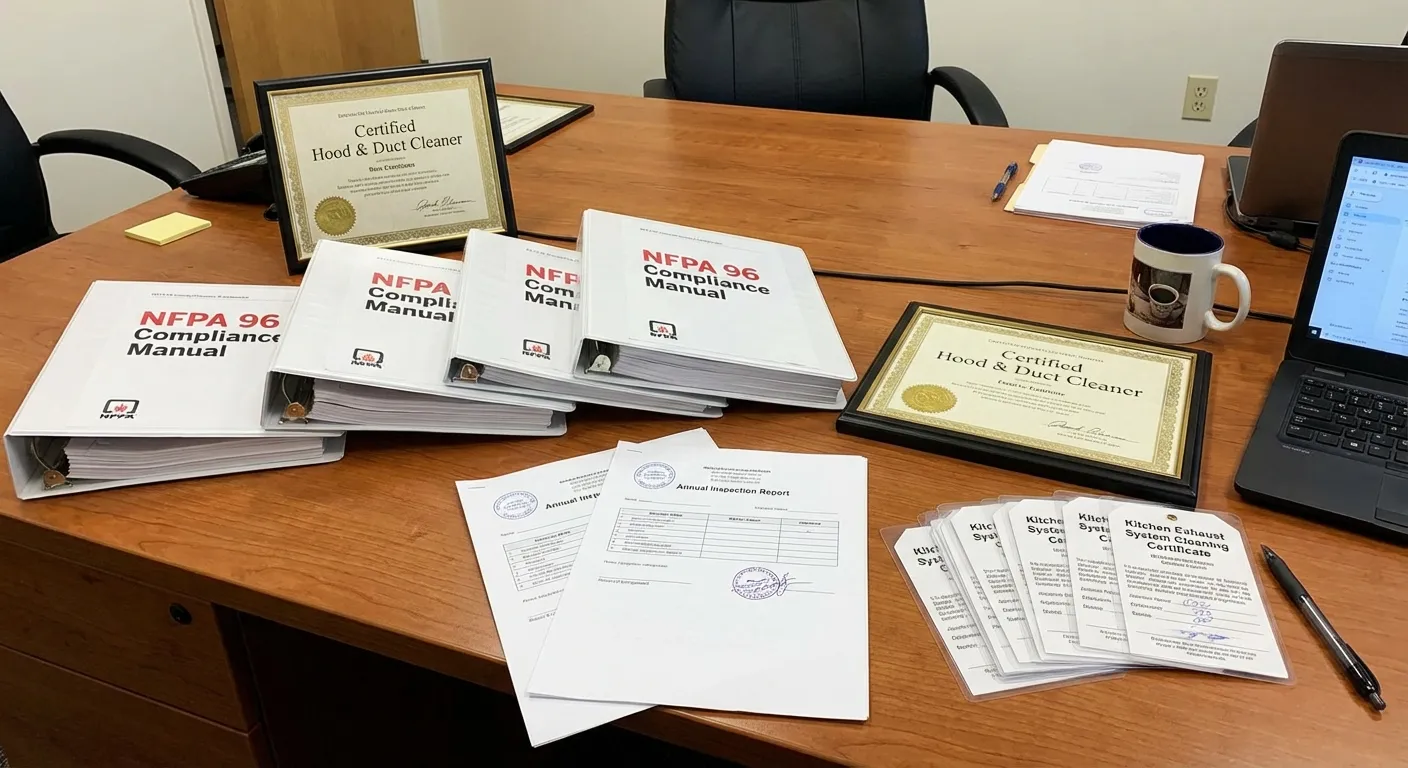
The National Fire Protection Association (NFPA) Standard 96 is the definitive code for ventilation control and fire protection of commercial cooking operations. For Nashville restaurant owners, understanding and complying with NFPA 96 isn't just about passing inspections—it's about protecting your business, your employees, and your customers.
What is NFPA 96?
NFPA 96 establishes the minimum fire safety requirements for the design, installation, operation, inspection, and maintenance of commercial cooking operations. This standard covers everything from the cooking equipment itself to the hoods, ducts, fans, and fire suppression systems that keep your kitchen safe.
Required Cleaning Frequencies
NFPA 96 specifies cleaning intervals based on your cooking volume:
Monthly Cleaning Required
- Solid fuel cooking (wood, charcoal)
- 24-hour high-volume operations
- Wok cooking
Quarterly Cleaning Required
- High-volume cooking
- Charbroiling operations
- Heavy frying (including Nashville's hot chicken joints)
Semi-Annual Cleaning Required
- Moderate-volume cooking
- Standard restaurant operations
Annual Cleaning Required
- Low-volume cooking
- Seasonal operations
- Churches, day camps, community centers
Required Documentation
NFPA 96 requires that you maintain records of all hood cleaning services. These records should include:
- Date of service
- Name of cleaning company
- Areas cleaned (hood, ducts, fan, etc.)
- Before and after photos
- Service technician certification
Nashville-Specific Requirements
In addition to NFPA 96, Nashville restaurants must comply with local fire codes enforced by the Nashville Fire Marshal's office. The city has adopted NFPA 96 as part of its fire code, meaning compliance is legally required, not just recommended.
Davidson County Health Department inspectors also review exhaust system cleanliness during routine health inspections. A dirty hood system can result in health code violations and potential closure.
Preparing for Inspections
To ensure you pass your next inspection:
- Keep all hood cleaning documentation readily available
- Ensure service stickers are visible on the hood
- Maintain a regular cleaning schedule appropriate for your cooking volume
- Address any visible grease buildup immediately
- Verify that your fire suppression system is properly maintained
Insurance Implications
Most commercial kitchen insurance policies require NFPA 96 compliance. In the event of a fire, your insurance company will review your maintenance records. Failure to maintain proper cleaning documentation can result in claim denial, leaving you responsible for all damages.
Need Help with NFPA 96 Compliance?
Our certified technicians ensure every cleaning meets NFPA 96 standards and provide complete documentation for your records.
Get a Free Quote Call (615) 235-5373